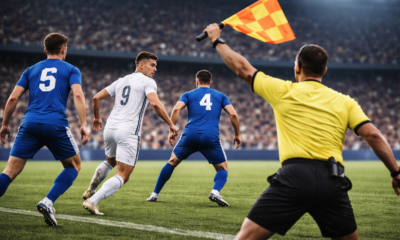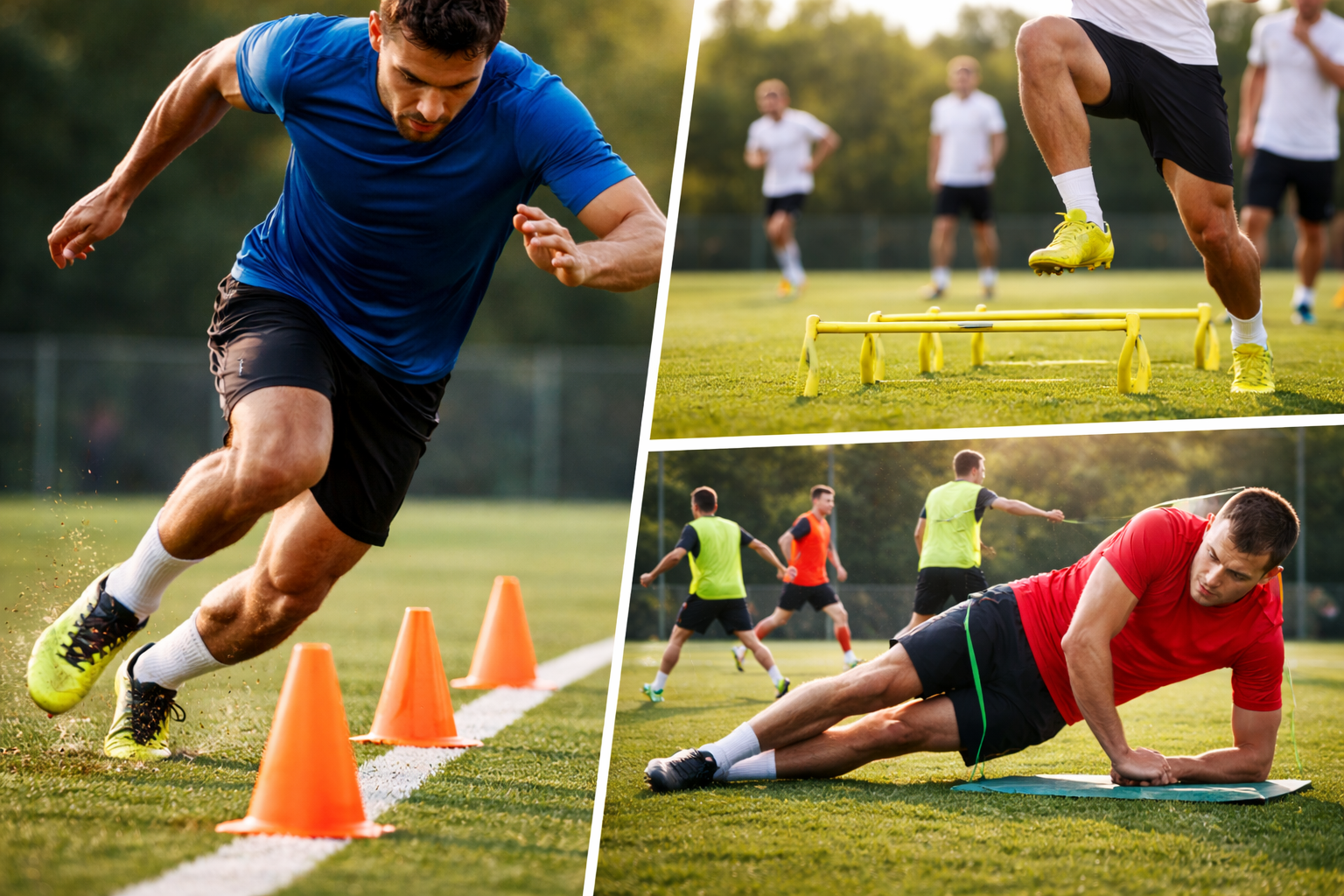
Watch a top match closely, and you spot it fast. The best players do not just run a lot. They run with timing. They burst five yards to press, stop on a dime, spin, and go again. They hold speed late in the game, then still find the extra step in minute 88.
That is not luck. It is training, and it is usually boring on paper.
Pro fitness is not one magic session. It is a steady mix of speed work, repeat sprints, hard changes of direction, strength, and smart recovery. Do that week after wee,k and your body stops panicking when the game gets chaotic. You stay sharp, and your legs keep listening.
This guide breaks down the most useful soccer fitness drills, why pros use them, and how you can copy the ideas without frying yourself.
What “fitness” means in soccer
Soccer fitness has three main jobs.
First, it builds a big engine. You need to cover ground for 90 minutes, and you need air in the tank.
Second, it builds repeat power. A match has dozens of short sprints and sharp accelerations. You need to hit those efforts again and again.
Third, it protects you. Players cut, twist, decelerate, jump, land, and clash. A fitter body handles that stress with fewer breakdowns.
That is why soccer fitness drills look messy compared to straight-line running. The game lives in starts and stops, not smooth laps.
The base engine: aerobic work that actually helps your match
Pros still build an aerobic base. They just do it in ways that carry over to the pitch.
Tempo runs
These are steady efforts at a “hard but controlled” pace.
- Goal: build endurance without heavy soreness
- Typical set: 15 to 25 minutes total work
- Feel: you can speak short phrases, not full sentences
You can do this on grass, track, or treadmill. Keep it simple and clean. Good posture, relaxed shoulders, quiet feet.
Extensive intervals
These look like: run, float, run, float.
- Example: 10 to 16 reps of 100 meters run, 100 meters easy
- Keep the fast parts smooth, not sprint speed
- Use the easy parts to reset your breathing
This style fits soccer better than long slow jogs, since it teaches pace changes.
The pro staple: repeat sprint ability
Games swing on the second, third, and fourth sprint. That is why repeat sprint work shows up in many clubs.

Repeat sprints, short recovery
- Example: 2 sets of 6 x 30 meters
- Rest: 20 to 30 seconds between reps
- Rest: 2 to 3 minutes between sets
Rule: your times should not fall off a cliff. Stop the set when your speed drops too much. You train quality, not suffering.
Sprint, decelerate, and re-accelerate
Straight sprints matter, but soccer adds brakes.
- Example: 8 to 10 reps of 15-meter sprints, stop in 5 meters, then sprint 10 meters
- Rest: 45 to 60 seconds
Focus on strong hips and quiet knees. Your body should look stable when you stop.
Change of direction: where fitness meets skill
A lot of “tired legs” is poor braking skill. Pros train deceleration like a weapon.
Shuttle runs with clean turns
- Example: 5-10-5 shuttle, 6 to 10 reps
- Rest: 60 to 90 seconds
Coaching cues:
- lower your center of mass before the turn
- plant under your hips, not far in front
- push the ground away, then go
Box drills
Set four cones in a square, 8 to 12 meters per side.
- Pattern: sprint, shuffle, backpedal, sprint
- Work: 10 to 20 seconds
- Rest: 40 to 60 seconds
- Sets: 6 to 10
This feels simple, then it gets real fast. Keep your chest tall and your feet quick.
High-intensity intervals: the “red zone” sessions
This is where pro conditioning starts to look scary. Done well, it builds match intensity. Done badly, it wrecks you.
15 seconds on, 15 seconds off
- Start with 2 sets of 8 minutes
- Run the “on” parts at a fast pace you can repeat
- Walk or very easy jog on the “off” parts
This is a classic pro conditioning format. It hits your lungs and teaches you to recover quickly between efforts.
4 minutes hard, 3 minutes easy
- 3 to 5 reps
- The hard part sits close to your top sustainable pace
- The easy part resets you
This suits players who need a stronger engine, like midfielders and fullbacks.
Small-sided games: conditioning that feels like soccer
Many clubs use the ball as the main fitness tool. That keeps players engaged, and it trains decision-making under fatigue.
3v3 or 4v4, short rounds
- 4 to 6 rounds of 2 to 4 minutes
- 2 minutes rest between rounds
- Tight area forces quick movement and fast reactions
6v6 with pressing rules
Add a rule: win it back in 6 seconds or concede a point.
Now your effort has a target. Your “football fitness training” turns into a habit, not a chore.
Small-sided games build real legs, but they still need control. A coach watches intensity. A smart player does the same.
Strength work: the quiet foundation behind speed
Pros lift. Some lift heavy, some lift moderate, but almost all lift with purpose.
Strength supports:
- sprint speed
- deceleration
- jumping and landing
- joint health
Lower-body basics
Pick 2 to 3 main lifts per session.
- squat or split squat
- Romanian deadlift or hip hinge pattern
- hip thrust, or step-up
Keep reps clean. Add load slowly. Good form beats ego.
Single-leg strength for soccer
Soccer lives on one leg at a time.
- Bulgarian split squat
- single-leg RDL
- lateral lunge
Train both sides. Track your weaker side and bring it up.
Injury-proofing that pros treat as non-negotiable
Teams build small routines around common soccer trouble spots.
Hamstrings: Nordic curl progressions
Start with assisted versions if needed. Quality matters more than range early on.
Adductors: Copenhagen holds
Short holds build a strong inner thigh and groin. That matters for cuts and tackles.
Calves: straight-leg and bent-knee raises
Soccer loads calves nonstop. Train both positions.
These pieces look small, but they keep you available. That is the real win.
Warm-up habits pros use every day
A good warm-up makes the session better and lowers injury risk.
A simple structure:
- 3 to 5 minutes easy movement
- mobility for hips, ankles, and thoracic spine
- activation: glutes, core, calves
- build-up runs: 3 to 6 short accelerations
- one or two sharp changes of direction
You should feel ready, not tired.
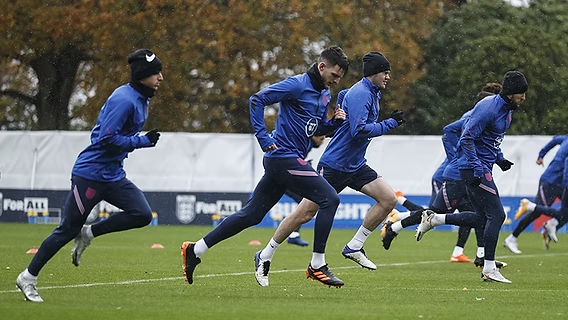
A sample weekly plan you can copy
This template fits many amateur players who train 3 to 5 days a week. Adjust around matches.
Day 1: Speed and repeat sprints
Short sprints, repeat sprint set, then light strength.
Day 2: Aerobic base
Tempo run or extensive intervals, then mobility.
Day 3: Strength and injury-proofing
Lower-body strength, core, hamstring and adductor work.
Day 4: Small-sided games or high-intensity intervals
Pick one hard conditioning focus, not both.
Day 5: Light technical work and recovery
Easy ball work, light movement, and sleep.
Match week needs less volume. Keep intensity, cut total work.
How pros track load without guessing
Many clubs use GPS. You can use simpler tools.
- time: total minutes trained
- distance: rough estimate or running app
- intensity: rate of perceived effort on a 1 to 10 scale
Write one line after each session: duration, hardest moment, and how your legs feel the next day. That small habit improves your pro conditioning fast.
The detail most players miss
Your best fitness plan fails when you stack hard days. Your body needs space to adapt.
Keep two hard conditioning sessions per week at first. Add a third only after you handle the first two with stable energy and no lingering pain.
Soccer rewards patience. Your legs should feel springy, not heavy.
Final whistle
Fitness does not show up as a badge you earn once. It shows up as small wins late in games. You press one more time. You track back one more time. You still strike the ball clean when your lungs burn.
Start with a simple mix: one speed session, one hard conditioning day, one base day, and two strength sessions across the week. Use soccer fitness drills that match real movement, and keep the quality high.
Then repeat it next week. Your body will get the message.