Great dribblers do three things well. They keep the ball low and protected. They change pace on command. They stay calm under contact and pressure.
Most players chase flashy moves first. That choice slows progress. You build your handle with control, then speed, then freedom.
This long guide shows how to improve dribbling with a clear system. It gives dribbling drills basketball players can run alone or with a partner. It adds ball handling tips that hold up in real games.
What “better dribbling” means in a game
A better handle does not mean more moves. It means fewer mistakes at high speed. It means you reach your spots and keep your options.
Use these three targets:
- Control: no lost dribbles in traffic
- Vision: eyes up on every change of direction
- Separation: one hard move creates space for a pass or shot
Track progress with numbers. Count turnovers in pickup games. Time your cone runs. Record how many clean reps you finish without a fumble.
One fast reality check
Do you need new moves to improve dribbling? No. You need tighter basics, then faster basics.
Moves fail when the base fails. The base is your stance, your touch, and your timing.
The stance that unlocks your handle
Start here. Your stance controls everything that follows.
- Bend knees, hips back, chest tall
- Feet shoulder-width, weight on the balls of your feet
- Off arm active, elbow bent, hand ready to shield
- Ball on the outside of your foot, not in front of your toes
Keep your dribble below the knee for tight control. Raise it to mid-thigh for speed in open floor. Use both levels on purpose.
How your hand should touch the ball
Many players slap the top of the ball. That creates float and delay. A clean dribble feels like a push.
Use these touch cues:
- Push the ball down with finger pads
- Keep the wrist loose
- Let the ball return to your hand, then push again
- Stay off the palm on every hard pound
Your fingers steer the ball. Your arm supplies force. Your body supplies balance.
Eyes up without losing control
Players think “eyes up” means staring at the rim. That leads to blind collisions. Use a simple rule. Look at the court, not the ball.
Try this progression:
- Dribble and read jersey numbers across the gym
- Dribble and call out fingers a partner holds up
- Dribble and scan corners, wings, and the nail every two bounces
Your handle becomes game-ready once you process space and keep the ball safe.
Change of pace beats change of direction
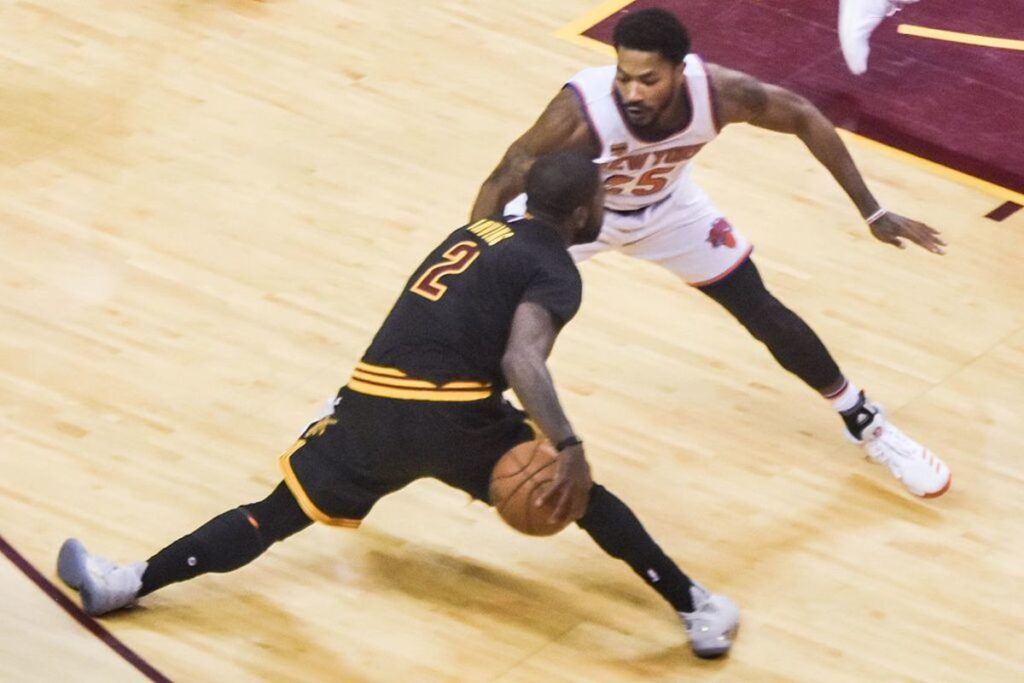
A fast crossover looks good. A slow-to-fast shift wins possessions.
Train three speeds:
- Walk: tight control, low bounce
- Jog: steady rhythm, eyes up
- Sprint: long stride, ball slightly higher, push ahead
Mix speeds inside the same drill. Start slow, then explode on a cue. That cue can be a clap, a timer beep, or a mental count.
The five core dribbles you must own
You can build most of your game from these five patterns:
- Pound dribble
- Crossover
- Between the legs
- Behind the back
- Retreat dribble
Do not rush the list. Make each move sharp at low speed first. Then add speed. Then add a defender.
Dribbling drills basketball players can run anywhere
These drills need one ball and a small space. Run them 4 days per week for 15 to 25 minutes.
Stationary pounds: low, hard, and clean
- 3 sets of 30 seconds right hand
- 3 sets of 30 seconds left hand
- Rest 20 seconds between sets
Keep the ball below the knee. Keep shoulders still. Make the sound loud and even.
V-dribbles: front, side, and diagonal
- 2 sets of 20 reps each direction per hand
- Directions: front-back, side-side, diagonal
Move the ball with the fingers. Keep your feet quiet. Feel the ball hit the floor on the same spot each rep.
Crossover series: wide, then tight
- 3 sets of 20 crossovers
- First set wide. Second set hip-width. Third set knee-width.
A tight crossover needs a low center. Your hips drop, and the ball stays outside your frame.
Between-legs rhythm: step and snap
- 3 sets of 15 reps each side
- Step forward with the lead foot. Snap the ball through. Catch on the outside.
Do not swing the ball around the knee. Send it straight through the window between your legs.
Behind-back control: wrap, then drive
- 3 sets of 12 reps each side
- Start slow. Then add a hard push forward after the wrap.
The behind-back dribble protects the ball. Use it to escape pressure, then go.
Retreat dribble: back, back, go
- 5 reps each side
- Two hard retreats, then one explosive forward dribble into a change
Keep your shoulders over your hips. Do not lean back. Create space, then attack it.
Two-ball work for faster hands
Two-ball drills expose weak coordination fast. Use them 2 to 3 times per week. Keep the session short, around 8 to 12 minutes.
Try this set:
- Two-ball pounds, same time: 3 x 20 seconds
- Two-ball pounds, alternating: 3 x 20 seconds
- One high, one low: 3 x 20 seconds
- One crossover, one pound: 3 x 20 seconds
Stay patient. The left hand usually lags. Keep reps clean, then speed up.
Footwork drills that make your handle dangerous
Ball control matters. Footwork turns control into separation.
Cone zigzag with pace shifts
Set 5 cones, 2.5 meters apart. Sprint to each cone, then change direction.
- 4 runs with right-hand turns
- 4 runs with left-hand turns
- Rest 45 seconds between runs
Add a rule. Change pace at cone three every run. Start slow, then explode.
Stop-start dribble into a shot pocket
Pick a line on the floor. Dribble at jog speed. Stop on two feet. Drop hips. Then push out.
- 10 reps right hand
- 10 reps left hand
This drill builds control at the moment defenders reach.
Contact balance drill with a partner
A partner bumps your shoulder with a forearm pad or a towel roll. You keep the dribble alive.
- 3 rounds of 20 seconds each side
Stay low. Keep the ball outside the bump. Use the off arm to create space.
Real-game ball handling tips that cut turnovers
These cues work under pressure. Use them in every run.
- Keep the ball on the outside hip in traffic
- Use your body as a wall, not your arms as a shield
- Take shorter steps on tight moves
- Take longer steps on speed dribbles
- Pick up the ball strong, elbows out, chin up
- Stop dribbling early, then pass on balance
Many turnovers come from one habit. Players dribble into traps, then panic. A strong retreat dribble fixes that pattern.
The most common dribbling mistakes
Fix these fast, and your handle jumps.
You dribble too high
High dribbles invite steals. Drop your hips. Lower the bounce. Keep the ball below the knee in crowds.
You move the ball, not your defender
Moves do not win by themselves. Your feet and shoulders sell the attack. Move your body first, then move the ball.
You train one hand too much
A right-only handle breaks in games. Defenders shade you. Coaches see it. Teammates feel it.
Set a rule. Left hand gets the first five minutes of every session.
You never train under fatigue
Your handle changes once legs burn. Add a finish to every drill.
Example: 20-second stationary drill, then one full-speed drive to a line, then a controlled stop.
A simple 4-week plan to improve dribbling
This plan fits most players. Each session takes 25 to 35 minutes. Add shooting after.
Week 1: control and touch
- Stationary pounds
- V-dribbles
- Crossover series
- Between-legs rhythm
Goal: 200 clean reps per hand per day.
Week 2: pace and footwork
- Cone zigzag with pace shifts
- Retreat dribble work
- Stop-start pocket drill
Goal: clean changes at speed, no extra bounces.
Week 3: pressure and contact
- Partner bump drill
- Two-ball work
- Retreat into attack sequences
Goal: no lost dribbles during contact rounds.
Week 4: game combos
- Retreat, crossover, drive
- Between-legs, in-out, drive
- Behind-back escape, sprint out
Goal: one move creates a lane, then you finish the play.
How to measure your progress
Use these tests once per week:
- Stationary control test: 60 seconds, no fumble, each hand
- Cone zigzag time: 5 cones, down and back, both hands
- Pickup turnover count: track turnovers per game
Write the numbers down. Better dribblers show it in fewer mistakes and faster attacks.
The handle that holds up in real games
A great handle looks quiet. The ball stays close. The player stays balanced. The defender guesses, then reacts late.
Run the dribbling drills basketball players trust. Keep reps clean. Add speed in small steps. Add pressure with intent.
Do that for four weeks, and you will improve dribbling in ways teammates notice first.