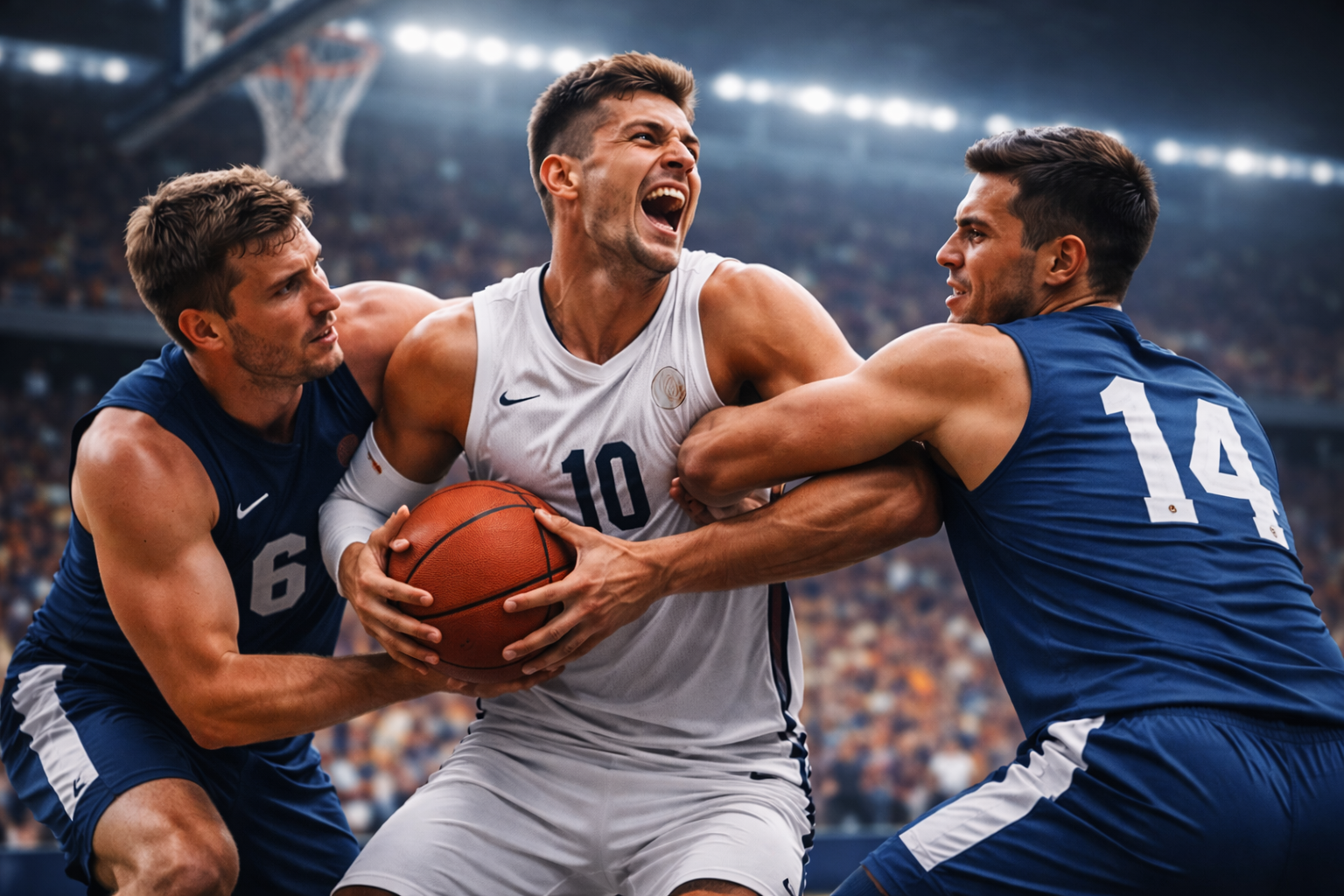
Basketball moves fast, and contact comes with every cut and drive. Fouls exist to keep that contact fair and safe. Once you learn the main calls, the game makes more sense in real time.
This guide covers basketball fouls explained in plain language. You will learn the most common types of fouls, what referees look for, and how team fouls change late-game tactics. You will also get simple fixes that reduce foul trouble.
What counts as a foul in basketball
A foul is illegal contact that creates an advantage. The contact can stop a player’s path, dislodge the ball with the body, or hit a shooter’s arm. The referee judges two things first: who caused the contact and what effect it had.
Some contact is legal. Basketball is not a no-contact sport. Shoulder-to-shoulder contact can be legal if both players hold position and neither displaces the other.
A foul changes possession, adds free throws, or both. The exact penalty depends on the foul type and the team foul count.
Personal fouls, the main category
Most whistles in a game are personal fouls. They involve illegal contact between players during live play.
Personal fouls include defensive fouls, offensive fouls, and loose-ball fouls. They all add to a player’s foul count.
In many competitions, five personal fouls means disqualification. The NBA uses six. Check your league rules, then plan minutes around them.
Blocking foul
A blocking foul happens when a defender impedes an opponent without legal guarding position. The key word is position. Referees want to see the defender set, then absorb the contact.
Common blocking foul moments:
- A defender slides under a driver late
- A help defender arrives after the gather step
- A defender opens the hips and rides the ball handler
A clean fix is early footwork. Get to the spot first, then stay vertical. Late slides trigger most blocking calls.
Charging foul
A charge is an offensive foul. The ball handler runs into a defender who has legal position. The defender must arrive first and stay in that spot, with the chest facing the opponent.
Charges show up in two common ways:
- A driver lowers the shoulder and displaces the defender
- A player attacks a set help defender in the lane
Referees watch the defender’s feet and torso. If the defender is still moving into the path, the call often flips to a block.
Offensive foul
Not every offensive foul is a charge. Offensive fouls include illegal contact by the player with the ball, and illegal screens by teammates.
Common offensive fouls:
- Push-off with the forearm to create space
- Hooking a defender’s arm on a drive
- Lowering the shoulder into the chest on a straight-line drive
The best way to avoid these is spacing and angles. Attack hips, not chests. Use a change of pace, then go around the defender.
Reaching foul
Players call this a “reach-in,” and it is one of the most frequent whistles. A reaching foul happens when a defender makes illegal contact while trying to steal.
Referees usually call it when:
- The defender hits the wrist or forearm
- The defender reaches across the body and bumps the hip
- The defender jabs at the ball and hits the dribbler first
Want fewer reaching fouls? Keep your hands active, then move your feet first. Most steals come from positioning, not lunging.
Hand-check foul
Hand-checking is a type of contact on the ball handler. A defender uses the hand or forearm to steer, slow, or redirect a dribbler.
You will see hand-check calls when:
- A defender keeps a hand on the hip for multiple steps
- The forearm presses into the side during a drive
- The defender “rides” the ball handler around a screen
A safer habit is touch-and-release. One quick touch can be legal in some settings. Continuous contact invites the whistle.
Holding foul
Holding is any grab that restricts movement. It can happen on-ball or off-ball.
Typical holding foul situations:
- Grabbing a cutter’s jersey on a backdoor cut
- Hooking an arm during a post-up
- Holding a rebounder’s shoulder to box out early
Referees look for restriction. If a player cannot run their path, a hold becomes obvious.
Pushing foul
A push foul involves force that displaces an opponent. It can be small or strong, but the effect matters.
Common push foul moments:
- Two hands on a driver’s back
- A shove on a rebound
- A push on a cutter to deny position
Coaches teach “chest up, hands high” for a reason. Hands on backs create easy calls.
Illegal screen, the moving screen call
Screens are legal when the screener sets feet and gives space. Illegal screens happen when the screener moves into the defender, leans, or extends arms and hips.
Referees call illegal screens when:
- The screener slides into the defender’s path
- The screener sticks out a knee or hip
- The screener pushes with the arms on contact
Set your feet, then stay still. Give the defender a step to avoid contact. A good screen feels like a wall, not a bump.
Shooting foul
A shooting foul occurs during the act of shooting. The penalty often includes free throws.
A player is in the act of shooting once the upward motion starts. If contact happens on the arm, wrist, or body and affects the shot, referees often award free throws.
Typical outcomes:
- Missed two-point shot: two free throws
- Missed three-point shot: three free throws
- Made basket plus foul: one free throw, the “and-one”
Smart defenders jump straight up. Vertical contests cut fouls and still bother shots.

Loose-ball foul
Loose-ball fouls occur when neither team controls the ball. These fouls happen during rebounds, tipped balls, and scramble plays.
Common loose-ball fouls:
- Over-the-back contact during a rebound
- Pushing a player out to gain position
- Holding an arm to stop a jump
Over-the-back is not a rule by itself in many books. Referees call the push, hold, or displacement that happened on the rebound.
Technical foul
A technical foul is non-contact or unsportsmanlike conduct. It can apply to players, coaches, or the bench.
Common technical foul triggers:
- Arguing calls with aggressive language
- Taunting an opponent
- Excessive complaining after warnings
- Delay of game actions, like touching the ball after a made basket
Penalties vary by league. Many award one free throw and possession. Some award free throws with possession kept by the shooting team.
Technicals change momentum fast. The best teams treat them like turnovers and avoid them.
Flagrant foul
A flagrant foul involves unnecessary or excessive contact. Referees consider speed, force, and follow-through. The goal is player safety.
Common flagrant examples:
- Hard contact to the head on a shot contest
- A reckless swipe with no play on the ball
- Dangerous undercutting of a shooter landing space
Flagrants bring heavier penalties, often free throws plus possession. Serious cases lead to ejection.
Team fouls and the bonus
Team fouls shape the second half of games. Each personal foul adds to the team foul total, with some exceptions in some leagues.
Once a team hits the bonus, certain non-shooting fouls lead to free throws. Many rule sets use a “one-and-one,” then a “double bonus.” The NBA uses a bonus that awards two free throws on many team fouls in a quarter.
This is why defenses tighten late. Teams switch from aggressive reach attempts to solid position defense. Free points decide games.
Common foul myths that cause confusion
“All contact is a foul”
Wrong. Basketball allows contact within legal position. Referees call illegal contact that creates an advantage or displacement.
“A hand on the ball means no foul”
Wrong. A defender can touch the ball and still foul. Wrist contact on a strip attempt still counts.
“The defender must be still to draw a charge”
Wrong in many cases. A defender needs legal position. Movement can be legal if the defender stays in front and absorbs contact without sliding into the path late.
How players get into foul trouble
Foul trouble usually comes from three patterns:
- Late rotations that force a bailout reach
- Poor stance that causes body bumps
- Over-helping that leaves a recovery sprint into contact
Fix the first step. Rotate earlier, then arrive under control. Your hands can stay high, and your feet can do the work.
How to play physical without fouling
You can defend hard and stay clean. Use these habits:
- Beat the ball to the spot, then show your chest
- Contest shots straight up, and avoid downward swipes
- Use your forearm on the post within your league’s rules
- Box out with hips and legs, not hands on backs
- Communicate switches early to avoid panic contact
Discipline wins. A defender who stays balanced avoids most foul calls.
The point of fouls in basketball rules
Basketball rules exist to protect space and protect players. Fouls punish illegal contact that changes the play. Once you know the common calls, you can predict whistles before they happen.
Watch the feet, then the torso, then the hands. That order explains most personal fouls. Then track team fouls as the game tightens. The match will feel slower in your head, even when it stays fast on the floor.