Hitting a baseball requires timing and the right equipment. You must find a tool that matches your strength and your league. This baseball bat guide provides the facts for every player. It removes the guesswork from your next purchase. You will learn about sizes, materials, and the rules of the game.
The Rules of the Game
Every league has its own set of equipment standards. You must check these rules before you go to the store. High school and college players must use BBCOR bats. This stands for Batted Ball Coefficient of Restitution. These bats have a .50 rating for ball exit speed. This rule keeps the game safe for pitchers and infielders. BBCOR bats always have a barrel diameter of 2.625 inches. They also follow a strict weight rule.
Youth leagues often use different standards. Little League and many park districts require the USA Baseball stamp. These bats behave like wood. They do not have much pop. This design teaches young players how to hit with good form. Other travel leagues use the USSSA stamp. These bats have a 1.15 BPF rating. This means the ball jumps off the barrel much faster. Using the wrong stamp can result in an automatic out. Your coach might even face a penalty.
Measuring for the Right Length
A player needs a bat for plate coverage. You can find your ideal size with three simple physical tests. Stand with your feet together on flat ground. Place the bat handle next to your leg. The knob should reach the center of your palm. The top of the bat should touch your hip bone. A bat reaching your waist is too long.
Use the chest test for more data. Place the knob in the center of your chest. Extend your arm straight out to the side. Your fingertips should reach the end of the barrel. Reach for the end cap with your palm. The bat is too long for a palm past the cap.
A wingspan test works well too. Hold the bat handle in your hand. Stretch your arms out wide like a letter T. The barrel should end at the middle of your chest. Height and weight determine the proper size. Use the table below for a starting point.
| Player Height | Bat Length |
| 3’9″ to 4’0″ | 26 – 27 Inches |
| 4’1″ to 4’4″ | 28 – 29 Inches |
| 4’5″ to 4’8″ | 29 – 30 Inches |
| 4’9″ to 5’0″ | 30 – 31 Inches |
| 5’1″ to 5’4″ | 31 – 32 Inches |
| 5’5″ to 5’8″ | 32 – 33 Inches |
| 5’9″ and Up | 33 – 34 Inches |
The Math of Weight and Drop
Weight is just as important as length. Manufacturers measure weight in ounces. They use a number called the drop. You calculate the drop by subtracting the weight from the length. A 30-inch bat that weighs 20 ounces has a drop of 10. A lower drop number means a heavier bat.
BBCOR bats are always a drop 3. This is the heaviest ratio in amateur baseball. Youth players use higher drops like 10, 11, or 12. These light bats help kids develop swing speed. You should choose the heaviest bat you can swing fast. A heavy bat hits the ball farther if your speed is high. Hold the bat out in front of you with one hand. Can you keep it still for 30 seconds? Your arm should not shake or drop.
Material Choices: Alloy and Composite
Material Science: Alloy and Composite
Manufacturers use different materials to build every baseball bat barrel. You must choose baseball bat designs based on your budget and climate. Each material reacts differently when it hits a ball.
Alloy Bats and Aluminum Construction
Alloy bats use aluminum mixed with metals like zinc or copper. These bats feel stiff and provide a loud ping sound. You do not need a break-in period for an alloy bat. It is ready for the game the moment you leave the store.
Alloy is very durable. It handles cold weather well. The metal does not crack in low temperatures. The sweet spot is smaller on these metal barrels. You will feel more vibration in your hands on a missed hit. Manufacturers often use thinner walls to save weight. This helps you swing the bat faster.
Composite Bats and Carbon Fiber
Composite bats use layers of carbon fiber and resin. These materials create a trampoline effect on the ball. The barrel compresses and then pops back out with force. This design offers a much larger sweet spot for the hitter.
You must break in a composite bat. Hit 200 balls off a tee to loosen the carbon layers. Rotate the bat a quarter turn after every single swing. Composite bats can crack if the temperature drops below 60 degrees. The carbon fiber becomes brittle in the cold. These bats make a soft thud or crack sound. They reduce the sting in your hands.
Hybrid Bat Designs
Hybrid bats combine an alloy barrel with a composite handle. This mix gives you the durability of metal and the flex of carbon. The alloy barrel works in any weather. The composite handle stops vibrations from reaching your grip. Power hitters often choose hybrid models. They like the heavy feel of the metal barrel.
The Construction of the Bat: Engineering Your Swing
When we talk about “construction,” we aren’t just talking about what the bat is made of (alloy vs. composite), but how the handle, barrel, and connection pieces interact. This architecture determines how much energy is transferred to the ball and how much vibration is sent back to your hands.
1. One-Piece Construction: The Power Hitter’s Choice
A one-piece bat is forged or molded from a single continuous piece of material. Whether it’s all-alloy or all-composite, there is no break between the handle and the barrel.
- The Physics: Because there is no joint, these bats are extremely stiff. When you make contact, the bat doesn’t flex or “give.” This ensures that maximum energy is transferred directly from your swing into the ball.
- The “Feel”: One-piece bats are famous for their “feedback.” If you hit the ball off the end or near the handle, you will feel a significant sting. While this sounds like a negative, elite power hitters often prefer it because it tells them exactly where they made contact, allowing them to adjust their swing.
- Best For: Strong, high-velocity swingers who want a direct, stiff feel and don’t mind a little vibration on a miss-hit.
2. Two-Piece Construction: The “Whip” and Comfort
These bats are manufactured as two separate pieces—a handle and a barrel—that are bonded together using a specialized connection system (often involving an elastomer or rubber-like dampening material).
- The “Whip” Effect: The connection point allows the handle to flex independently of the barrel. As you swing, the barrel “lags” slightly behind the hands and then snaps forward at contact, creating a “whip” effect that can slightly increase barrel speed for some players.
- Vibration Dampening: This is the biggest selling point. The connection piece acts as a shock absorber. When you hit a ball outside the sweet spot, the connection piece “traps” the vibration before it can travel down the handle to your hands.
- Best For: Contact hitters, younger players, or anyone who wants to eliminate the “sting” of a missed hit.
3. Hybrid Construction: The Strategic Middle Ground
Hybrid bats usually feature an alloy barrel joined to a composite handle. This is almost always a two-piece design.
- Why Hybrid? It aims to give you the “pop” and durability of an aluminum barrel (which requires no break-in and works in all weather) with the vibration-dampening and lightweight feel of a carbon-fiber handle.
- Durability vs. Comfort: You get the loud “ping” of metal but the smooth, comfortable swing of a composite bat. It’s a popular choice for high school and college players who want a heavy-hitting barrel without the hand-shaking feedback of a one-piece alloy.
4. The Anatomy of the Handle and Knob
The part of the bat you actually touch is often the most overlooked.
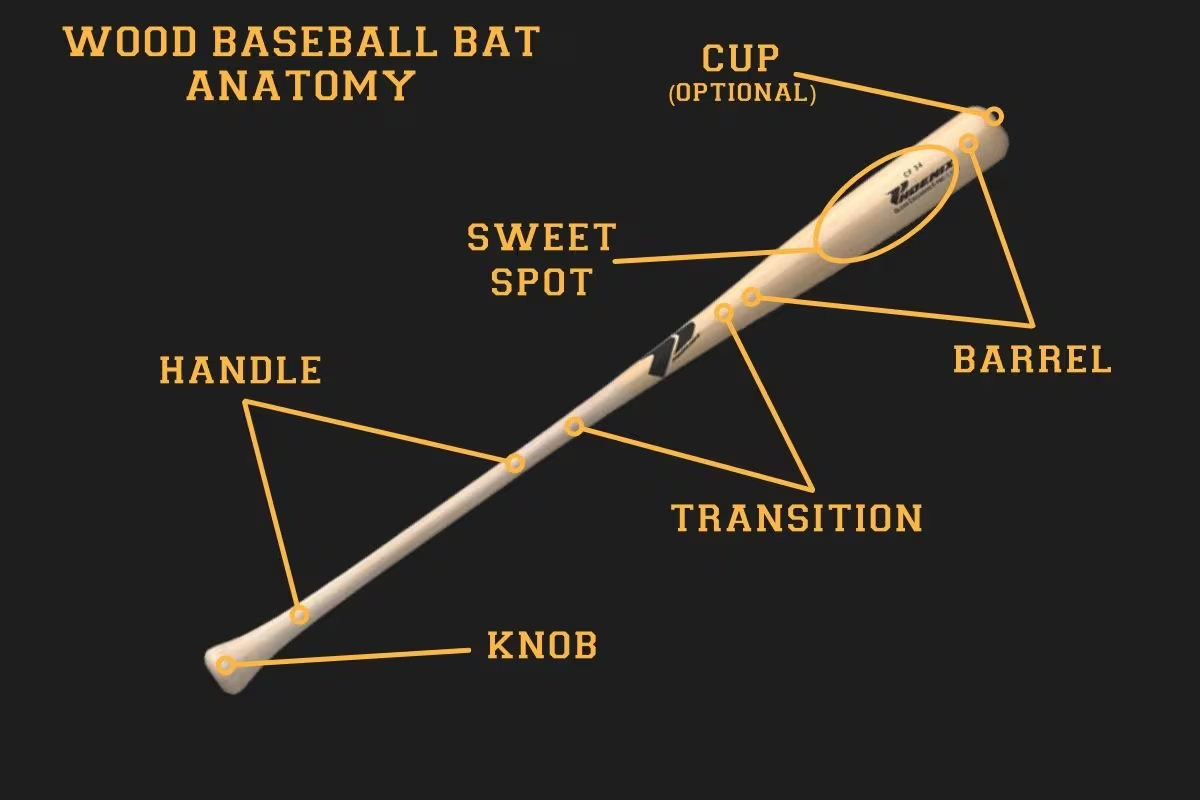
- The Taper: This is the area where the thin handle begins to widen into the barrel. A long taper spreads the weight out, often making the bat feel more balanced. A short, aggressive taper often indicates an end-loaded bat meant for power.
- The Knob: * Standard Knob: The traditional rounded base. Works for most, but can cause friction on the palm.
- Flared Knob: Tapers out gradually. It’s popular among players who like to “loop” their pinky finger over the knob for more leverage.
- Axe Handle: An ergonomic, oval-shaped handle (similar to an actual axe). It’s designed to fit the natural shape of your hand, reducing tension and potentially increasing grip speed.
- The End Cap: It’s not just a “plug.” High-end bats use lightweight, reinforced end caps to “tune” the sound of the bat and move the center of gravity closer to the handle, which makes the bat easier to swing (lowering the MOI, or Moment of Inertia).
Comparison Summary: Which Build Fits You?
| Feature | One-Piece | Two-Piece | Hybrid |
| Flex | Very Low (Stiff) | High (Whip effect) | Moderate |
| Vibration | High (Lots of “sting”) | Very Low (Comfortable) | Low |
| Energy Transfer | Maximum | Moderate | High |
| Best Player Match | Power Hitters | Contact / Youth | All-Around / Elite |
Balanced versus End-Loaded Feel
Weight distribution changes how a bat feels in your hands. Balanced bats have weight spread evenly. They are easy to swing and control. Most players should start with a balanced bat. It helps you keep your hands inside the ball.
End-loaded bats have extra weight at the top of the barrel. This weight acts like a hammer. It creates massive force when you make contact. You need a lot of strength to use an end-loaded bat. If your swing is slow, this weight will hurt your performance. Power hitters use end-loaded bats to drive the ball over the fence.
Picking the Best Baseball Bat for Wood Leagues
Some players prefer the sound and feel of wood. Wood bats are required in professional leagues. They have a very small sweet spot. This forces you to become a better hitter. Maple is the most popular wood today. It is very hard and dense. It does not flex when it hits the ball.
Ash is lighter and more flexible. It offers a larger sweet spot than maple. The wood grain can flake over time. Birch is a good middle ground. It starts flexible and gets harder with use. You must always hit with the wood grain facing up. This prevents the bat from snapping on a hard pitch.
Handle and Grip Details
The handle is your connection to the tool. Some handles are thick and offer more durability. Thin handles allow your wrists to move faster. Many players use grip tape to improve their hold. This tape can be 0.5 millimeters to 1.8 millimeters thick. Thinner tape provides more feel. Thicker tape absorbs more shock.
The knob at the bottom keeps the bat in your hand. Standard knobs are flat. Some players like a flared knob. This shape reduces pressure on the palm. It can help prevent injuries to the hamate bone in your hand.
Maintenance and Care
A good bat is a big investment. You must take care of it to make it last. Do not use your game bat in a batting cage with yellow dimpled balls. These balls are very dense. They can dent alloy and ruin composite fibers. Use a cheap wood or alloy bat for cage work.
Store your bat inside your house. Extreme heat or cold can damage the materials. Clean the barrel with mild soap and water. Avoid using chemicals or abrasive pads. Check the cap at the top for cracks. A loose cap can make a bat illegal for play.
Final Selection Strategy
Go to a store and swing several models. Does the weight feel comfortable? You should feel confident when you hold the bat. A higher price does not always mean more hits. Focus on the fit and the rules of your league.
You should talk to your coach about your swing type. Are you a lead-off hitter or a power hitter? Your role on the team helps you choose baseball bat features. Speed hitters want light, balanced bats. Clean-up hitters look for heavy, end-loaded barrels. Take your time and test the gear.