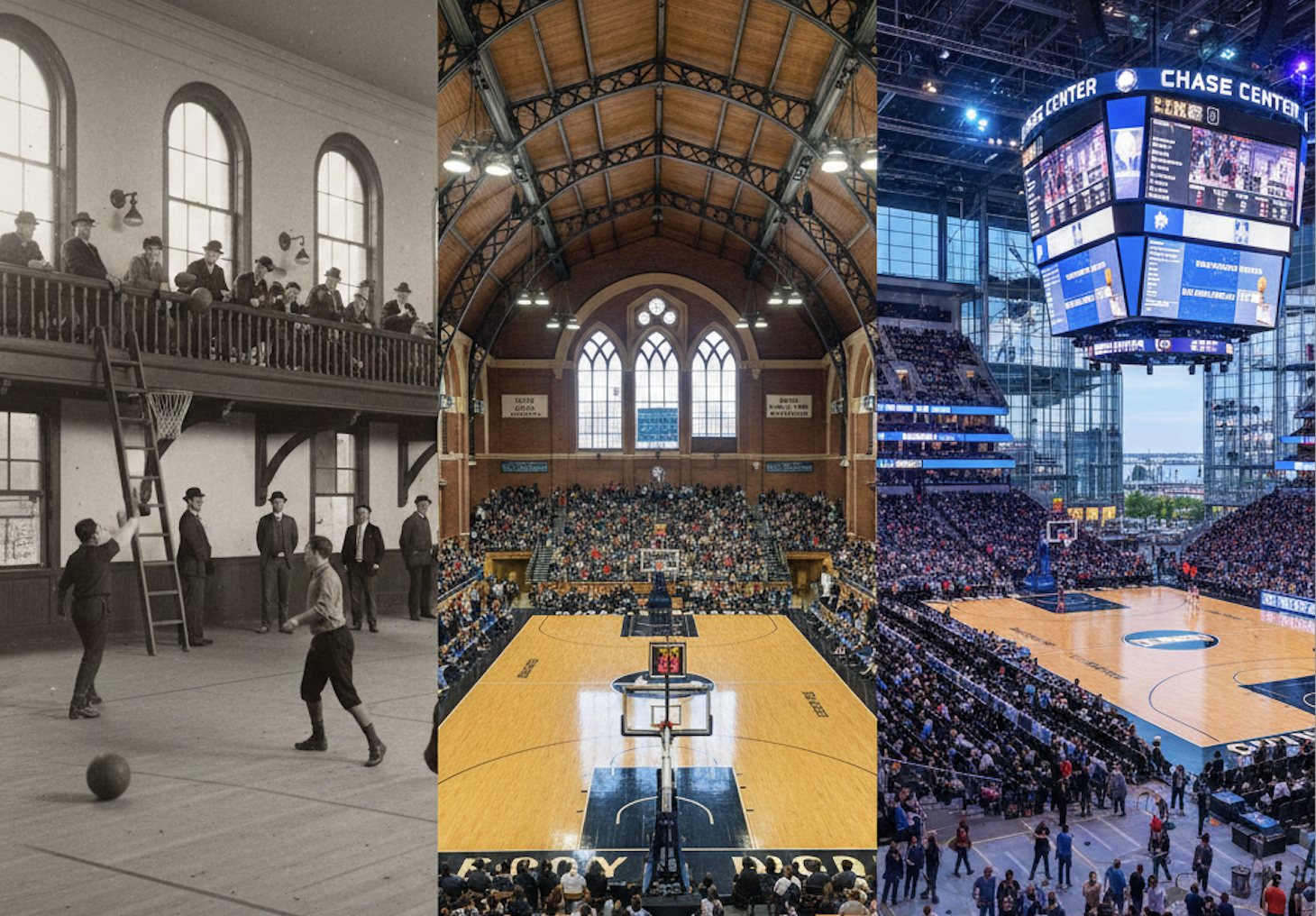
Basketball started in 1891 inside a YMCA gym in Springfield, Massachusetts. Two peach baskets hung from a balcony. A ladder waited nearby to retrieve the ball. The court had no painted lines. There were no backboards. Fans stood a few feet from the players.
That modest setting shaped early court history. The game required little space and little money. Schools, churches, and community groups adopted it within a decade. By 1900, many colleges played on wooden floors that measured 50 by 84 feet. Boundaries were marked, yet standards differed from campus to campus.
Early Gyms and Improvised Courts
In the 1890s, basketball did not drive building design. Existing gymnasiums hosted the sport. These halls were built for gymnastics drills and indoor track practice. Pine boards covered simple joists. Brick walls sat tight against the sidelines. Players often crashed into them during full sprints.
James Naismith’s first contest used a balcony railing as part of the boundary. Spectators leaned over the edge and shouted advice. Each made basket required a ladder. The pace was slow, but attendance grew.
By 1893, universities such as Yale and the University of Chicago constructed larger gymnasiums. These buildings still served many activities. High vaulted ceilings supported climbing ropes and running tracks. Tall windows admitted daylight. Night games relied on gas lamps that cast uneven light across the floor.
As crowds expanded, safety and visibility improved. Backboards became common by 1906. They stopped fans from interfering with shots from galleries above the baseline. Steel rims replaced early metal hoops. Nets slowed the ball and confirmed each score. Some venues even installed wire cages around the court to control rowdy spectators.
Indiana high school fieldhouses in the 1920s marked a turning point. Towns built gyms that seated 5,000 to 7,000 fans. Steel trusses spanned the roof without interior columns. Every seat offered a clear view. Designers began to treat basketball as the main event. This shift laid the groundwork for modern stadium design.
Postwar Expansion and the Rise of the Pro Arena
Professional basketball gained traction after World War II. The NBA formed in 1946. Early teams played in shared hockey arenas such as Madison Square Garden in New York. Ice often sat beneath the hardwood. Crews installed and removed the court within hours.
These multipurpose venues shaped the next stage of basketball arena evolution. Architects valued flexibility. Seating bowls formed steep ovals that brought fans closer to the floor. Center-hung scoreboards appeared above midcourt. By the 1960s, metal halide lighting improved visibility for television broadcasts.
Civic ambition fueled construction in the 1970s. Cities financed large concrete arenas that seated more than 18,000 spectators. Owners sought new revenue streams in the 1980s. Luxury suites transformed the business model. The Palace of Auburn Hills, opened in 1988, included more than 100 suites and expansive club areas. Premium seating drove profits and influenced arena planning across the league.
Locker rooms expanded. Media facilities grew. Concourse widths increased to handle larger crowds. Buildings became commercial assets, not just sports venues.
The Modern Basketball Palace
By the late 1990s, teams returned to urban cores. Owners wanted arenas that operated year round and anchored redevelopment projects. Glass façades opened interiors to the street. Public plazas connected fans to transit lines and nearby restaurants.
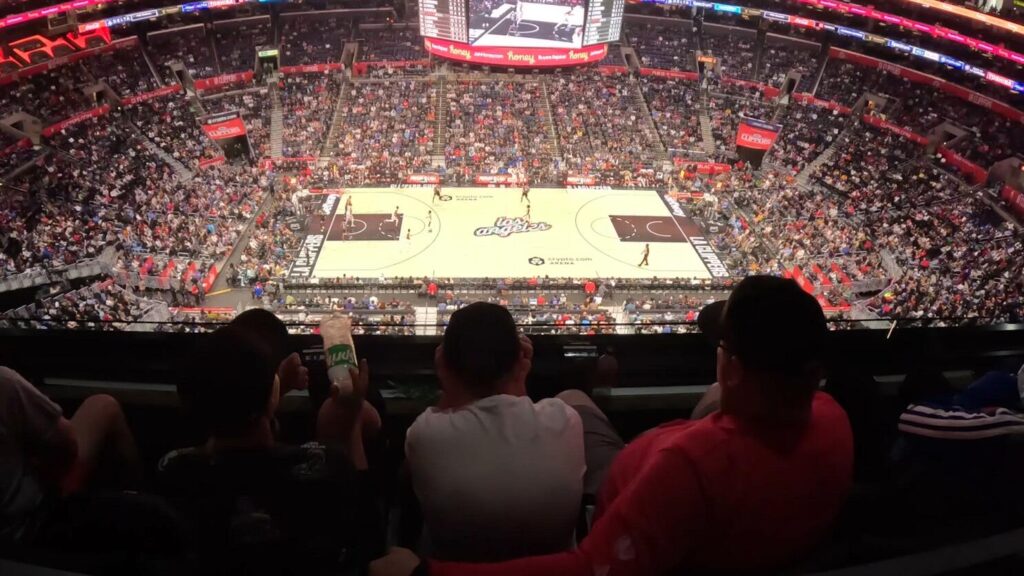
Staples Center in Los Angeles, opened in 1999, set a clear template. The 950,000 square foot complex seats about 19,000 for basketball. It hosts hockey and concerts under the same roof. Digital scoreboards replaced static panels. Massive video screens deliver replays in real time.
Court history entered a new phase with integrated technology. LED ribbon boards circle seating bowls. High-definition displays dominate center court. Wi-Fi networks support tens of thousands of devices. Broadcast areas accommodate global streaming partners.
Retractable seating systems allow rapid conversion between sports and events. The arena operates almost every week of the year. That level of use defines modern stadium design.
Community Courts and Global Influence
Basketball architecture extends beyond professional arenas. Outdoor courts in New York, Manila, and Paris serve as community landmarks. Designers treat these spaces as civic statements. Bold colors and graphic patterns define many projects built after 2015.
Copenhagen’s Superkilen park includes a bright red court set within a public plaza. In China, large training centers support youth academies and national programs. These facilities blend sport, education, and community life.
FIBA standardized international court dimensions at 28 by 15 meters. Consistent measurements improved global competition. Olympic basketball arenas now seat more than 20,000 fans. Temporary seating allows host cities to scale capacity based on demand.
Sustainability and the Data-Driven Future
Recent projects focus on resource use and operating cost. Solar arrays supply part of the power load. Rainwater systems feed plumbing and irrigation. Recycled steel and certified wood appear in structural elements.
Chase Center in San Francisco opened in 2019 with mixed-use planning at its core. The arena seats 18,064 for basketball. Offices, retail space, and a waterfront park surround the building. Events extend far beyond game nights.
Data now shapes basketball arena evolution. Architects model crowd movement before construction begins. They measure exit times, concession traffic, and restroom demand. Designers adjust stair placement and corridor width based on those findings.
The court surface has advanced in quiet ways. Modular hardwood panels lock together in sections. Shock-absorbing pads reduce stress on players’ joints. Modern finishes limit glare under bright broadcast lights.
Basketball began with a ladder and two baskets in a modest gym. Today it fills billion-dollar arenas with retractable seats and high-definition screens. Court history charts a steady rise from improvised halls to global showcases. Stadium design now reflects business strategy, urban planning, and fan expectation.
The next chapter will tighten the bond between arena and neighborhood. Buildings will serve as daily gathering places, not just event sites. That trajectory continues the long arc of basketball arena evolution, driven by growth, technology, and the simple demand for a clear view of the game.