The Importance of Hydration in Sports Performance
Water drives every system that keeps an athlete moving. Blood carries oxygen through plasma. Muscles contract through electrical signals. Joints rely on fluid for smooth motion. Strip away water, and performance drops fast.
Hydration sports science is clear on one point. Even mild fluid loss harms output. A body weight drop of two percent reduces endurance, speed, and focus. A 75-kilogram athlete who loses 1.5 kilograms through sweat will feel that decline within one session.
What Dehydration Does to the Body
Dehydration effects show up early and grow worse with time. Heart rate climbs at the same workload. Core temperature rises. Perceived effort increases.
In endurance events, pace slows. In team sports, sprint speed falls and reaction time lags. Studies show skill accuracy drops in soccer and basketball once fluid loss crosses two percent of body weight.
Muscle cramps often follow heavy sweat loss. Fatigue sets in sooner. Decision-making weakens under heat stress.
Severe dehydration can lead to heat exhaustion. Signs include dizziness, nausea, and confusion. These are medical red flags, not minor discomfort.
The body does not adapt well to large fluid deficits. It protects survival before performance.
Sweat Rate and Individual Needs
Athletes lose different amounts of fluid. Sweat rate depends on body size, intensity, clothing, and weather. A football player in full gear during summer camp can lose two to three liters per hour. A distance runner on a cool morning may lose less than one liter.
Measure sweat rate with a simple test. Weigh yourself before and after one hour of training. Subtract post-session weight from pre-session weight. Each kilogram lost equals one liter of fluid.
Replace that volume over the next few hours. This data gives a personal target, not a guess.
Hydration sports plans should reflect these numbers. Generic advice fails active athletes.
The Role of Electrolytes for Athletes
Sweat contains more than water. It carries sodium, potassium, and chloride. Sodium loss matters most. Heavy sweaters can lose 800 to 1,500 milligrams of sodium per liter.
Athletes need electrolytes that depend on sweat composition and session length. For workouts under 60 minutes in mild conditions, water often suffices. For longer or hotter sessions, add a drink with 300 to 700 milligrams of sodium per liter.
Sodium supports nerve signals and muscle contraction. It helps retain fluid in the bloodstream. Without it, large water intake can dilute blood sodium levels and cause an imbalance.
Endurance events over two hours demand planned intake. Combine fluids with electrolytes and carbohydrates. This mix supports blood volume and energy supply.
Timing Matters: Before, During, After
Start sessions hydrated. Urine color offers a simple gauge. Pale yellow signals good status. Dark yellow signals a deficit.
Drink 5 to 7 milliliters of fluid per kilogram of body weight about four hours before activity. A 70-kilogram athlete should drink 350 to 500 milliliters.
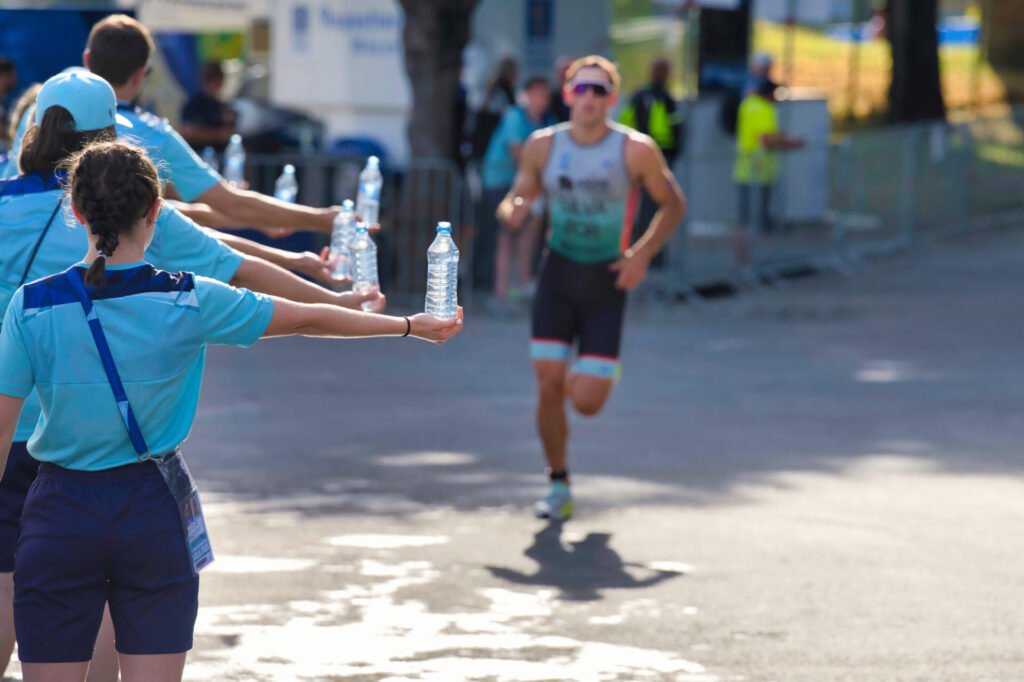
During exercise, aim to limit body weight loss to less than two percent. Most athletes need 400 to 800 milliliters per hour. Adjust for heat and sweat rate.
After training, replace 125 to 150 percent of lost fluid within four to six hours. If you lost one kilogram, drink 1.25 to 1.5 liters. Include sodium in recovery meals to support fluid retention.
This structure limits dehydration effects across repeated sessions.
Hydration and Strength Sports
Strength athletes often overlook hydration sports principles. They assume short sessions limit fluid loss. Heavy lifting still raises core temperature and sweat rate.
Research shows dehydration of three percent reduces strength and power output. It impairs repeated sprint ability and slows recovery between sets.
A power athlete who trains twice per day must treat hydration as part of programming. Drink steadily across the day, not only around workouts.
Youth and Female Athletes
Young athletes regulate temperature less effectively than adults. They produce more heat per body mass and sweat less efficiently. Coaches must schedule water breaks every 15 to 20 minutes in hot weather.
Female athletes face unique challenges. Hormonal shifts across the menstrual cycle can affect fluid balance. Monitoring body weight and symptoms helps adjust intake.
Education drives compliance. Teach athletes to track weight changes, urine color, and session duration. Data builds habits.
Heat, Travel, and Competition
Hot climates amplify dehydration effects. High humidity blocks sweat evaporation. Core temperature rises faster, and fluid demand climbs.
Travel adds risk. Air travel reduces cabin humidity to low levels. Athletes arrive dehydrated before competition begins.
Plan ahead. Increase fluid intake 24 hours before hot events. Use electrolyte drinks during travel. Avoid alcohol before competition days.
Championship games often push intensity higher than training sessions. Sweat loss can exceed expectations. Test hydration plans during practice, not during finals.
Signs That Hydration Is Working
Performance stays stable deep into sessions. Heart rate aligns with expected effort. Urine remains light in color. Body weight returns to baseline within a day.
These markers show that hydration sports strategies match workload.
Do athletes need expensive products to stay hydrated? No. Most benefit from water, measured sodium intake, and consistent monitoring. Commercial drinks help in long or hot events, but the principle remains simple. Replace what you lose.
Build Hydration Into the Training Plan
Coaches track sets, reps, and distance. Track fluid intake with equal care. Assign water breaks. Weigh athletes in high heat camps. Review data weekly.
Hydration links directly to recovery quality. Proper fluid balance supports blood flow, nutrient delivery, and waste removal. Poor balance slows adaptation and raises injury risk.
Elite programs treat hydration as a core pillar of preparation. Amateur athletes should do the same.
Hydration sports science leaves little room for debate. Fluid balance protects endurance, power, focus, and safety. Electrolytes that athletes lose through sweat must be replaced. Dehydration effects appear sooner than many expect.
Drink with intent. Measure loss. Replace it fully. Performance depends on it.