Soccer rewards repetition, attention, and smart practice.
Good training turns basic moves into muscle memory.
In this article, you will find an explanation of what soccer drills are, how to work on ball control, and how to progress through dribbling, passing, shooting, and finishing.
Coaches and players will find clear drills, session plans, and practical coaching points.
Read it with a notebook and a ball, and you will leave the field better than you arrived.
What are soccer drills?
Soccer drills are short, focused exercises designed to improve one skill.
A drill isolates a technique and repeats it under pressure.
Teams use drills in warmups, skills sessions, and tactical training.
A good drill has a simple rule, clear reps, and a measurable goal.
Examples include passing circuits, small-sided games, rondos, and shooting ladders.
Drills speed up skill learning by forcing repeatable movement patterns.
Use short drills for beginners and longer, higher-intensity drills for advanced players.
Rotate stations to keep sessions sharp and to build variety.
Ball control: what is ball control in soccer?
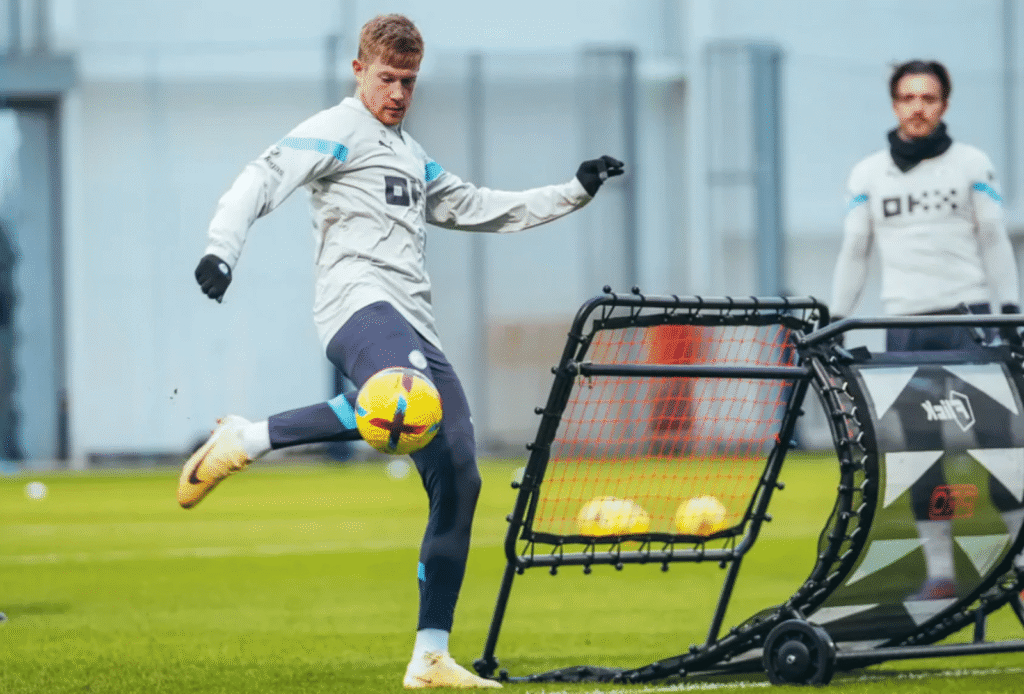
Ball control means receiving and managing the ball under pressure.
A good first touch creates time to pass or shoot.
Control includes trapping with the foot, thigh, chest, and shoulder.
It also covers cushioning the ball and quick reorientation for the next move.
Drills for ball control.
- One-touch wall: Pass the ball to a wall and take one touch to return it. Do twenty reps per foot.
- Controlled trap: Coach throws the ball at varying heights. Player traps and controls with the designated surface. Repeat ten times each surface.
- Tight-space possession: Play 4v2 in a five-meter square. Keep one or two touches. Rotate attackers and defenders.
Coaching cues.
Watch the first touch. Make it soft and forward. Open the body to see the field. Use the contact surface that suits the next action.
Dribbling: what is dribbling in soccer?
Dribbling is carrying the ball while moving and evading opponents.
It mixes pace, close control, and deception.
Good dribblers change speed and direction to create space.
Drills to build dribbling.
- Cone slalom: Dribble through cones with left and right foot alternation. Time the run for competition.
- 1v1 mirror: Two players face each other. The dribbler tries to beat the defender in a short lane. Switch roles after three attempts.
- Speed change runs: Dribble fast, then cut to a controlled touch and accelerate again. Repeat over 30 metres.
Coaching cues.
Keep the ball close at speed. Use the sole for quick stops and the inside or outside for sharp cuts. Keep the head up to spot teammates and defenders.
Passing: what is passing in soccer?
Passing is delivering the ball accurately to a teammate.
Passes control tempo, create chances, and move the defense.
Types include short ground passes, long diagonal switches, through balls, and lofted crosses.
Passing drills to practice accuracy and weight.
- Passing square: Four players form a square. One or two defenders enter. Attackers must keep possession with one-touch or two-touch rules.
- Switch play: Two lines at opposite sides. Player receives a pass, returns it, then sends a diagonal switch to the other side. Focus on weight and timing.
- Through ball timing: Coach rolls balls for through passes. Attacker times run behind the defensive line.
Coaching cues.
Aim for the receiving player’s feet or into space for the run. Use the right weight to avoid making the next touch hard. Communicate with calls and hand signals.
Shooting: what is shooting in soccer?
Shooting is powering the ball toward goal with intent to score.
It covers placement, power, and timing.
Good shooting combines technique and decision-making.
Shooting drills to sharpen finish.
- Shooting from crosses: Wing player delivers low and high crosses. Striker times the run and finishes with head or foot.
- Rebound shooting: Player receives a pass, shoots, and immediately follows up for rebounds. This trains reaction and second-chance finishing.
- Finishing under pressure: Small-sided attack with a goalkeeper and one defender. Attacker must finish from a service under time pressure.
Coaching cues.
Keep eyes on the ball. Strike with the laces for power or with the instep for accuracy. Plant the non-kicking foot beside the ball and follow through toward the target.
Finishing: what is finishing in soccer?
Finishing is the art of converting chances into goals.
It demands composure, placement, and quick assessment.
Finishing drills simulate match-like scenarios to build confidence.
Finishing exercises.
- Cutback finish: Wide player dribbles to the byline and cuts back. Striker times the run and finishes first time.
- One-touch frame: Cross enters the box and striker takes one touch to score. This trains timing and balance.
- Low-percentage chances: Coach feeds awkward balls from angles. Strikers must adapt to unusual trajectories.
Coaching cues.
Slow breathing helps in tense moments. Pick the corner. A calm finish often beats a powerful one.
Building a session: sample 75-minute plan
Warm-up (10 minutes). Light jog, dynamic stretches, and passing rondo.
Technical block (20 minutes). Stations for ball control and passing. Rotate every six minutes.
Dribbling and 1v1 drills (15 minutes). Slalom, mirror drills, and speed change runs.
Shooting and finishing (20 minutes). Rebound shooting and cross finishes with a keeper.
Small-sided game (10 minutes). 7v7 on reduced pitch to apply skills under pressure.
Adjust rep counts for age and fitness. Young players use more touches and shorter sprints. Older players use higher intensity and tactical constraints.
Measuring progress and common mistakes
Track improvements by recording reps, times, and completion rates.
Use video to review body position and timing.
Common errors include heavy first touch, poor body angle, and looking down at the ball.
Fix these issues with slow, deliberate repetition and constant feedback.
Coaching tips for all levels
Keep drills simple and precise.
Set clear objectives for every exercise.
Give brief, direct feedback during reps.
Use positive reinforcement for correct technique.
Create competitive elements to increase intensity and focus.
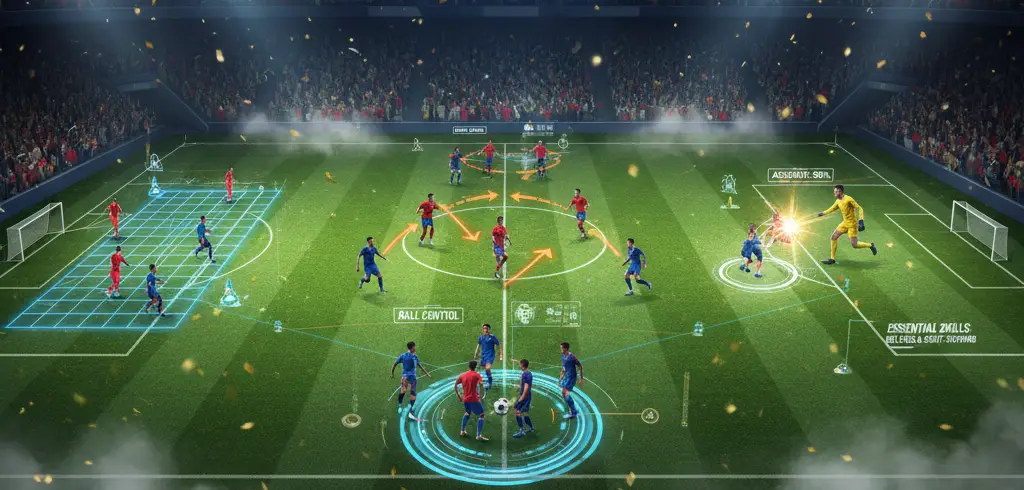
The Essential Skills Every Player Must Master
Soccer training centers on six essential skills. Each connects to the next, forming the rhythm of the game. Coaches design drills to sharpen these abilities until they become instinctive.
1. Ball Control
Ball control is the first touch and the calm that follows. A clean touch decides what happens next — whether to dribble, pass, or shoot. Players with strong control use every surface: inside foot, outside foot, thigh, or chest. They absorb speed and prepare the next action in one motion.
Drills that build control include juggling, wall passes, and tight-space rondos. Train both feet equally. A heavy first touch wastes possession, so focus on cushioning and accuracy.
2. Dribbling
Dribbling is how players move with purpose. It’s more than tricks — it’s timing, direction, and deception. The best dribblers, from street fields to professional academies, master pace change and body feints.
Drills like cone slaloms, 1v1 duels, and mirror runs improve agility and awareness. Always keep the ball close enough to protect but far enough to accelerate.
3. Passing
Passing keeps the team connected. Short passes build rhythm, and long passes stretch space. Knowing what is passing in soccer means understanding tempo — when to play fast and when to hold.
Players should work on one-touch passing, wall rebounds, and switch plays. Aim for accuracy first, then increase speed. Every good attack starts with a clean pass.
4. Shooting
Shooting tests precision under pressure. It requires technique and confidence. Every shot should have intention — power, placement, or deception.
Train with repetitive drills: volleys, quick turns, or crosses from the wings. Practice with both feet. Good shooters track the ball, plant cleanly, and strike through.
5. Finishing
Finishing is where practice meets composure. It’s what separates attackers from scorers. A good finisher keeps calm near goal and reads the goalkeeper’s body language.
Exercises like one-touch finishes, rebound drills, and cutback shots teach instinct and timing. Train to hit corners, not just the target. Small margins decide matches.
6. Decision-Making
Every skill depends on smart decisions. When to pass, dribble, or shoot shapes the outcome. Quick choices come from scanning the field early and trusting the training.
Small-sided games are best for building decision speed. They create constant pressure and limited time — just like real matches.
Final word on Soccer Drills and Skills
Training wins games when practice mirrors match pressure.
Drills teach patterns, while repetition builds muscle memory.
Ball control sets the foundation for every attack and defense.
Dribbling adds options. Passing connects players. Shooting and finishing put points on the board.
Work on each skill in short, focused sessions. Track progress with clear targets and honest review.
Master these elements and your play will become steadier, smarter, and more decisive.