Soccer has always been about space. How you use it. How you close it. How you turn a moment of stillness into a spark of movement.
Every player, from the goalkeeper to the striker, lives inside that logic. The position they play tells a story about their team’s style, their country’s tradition, and how the sport itself has evolved.
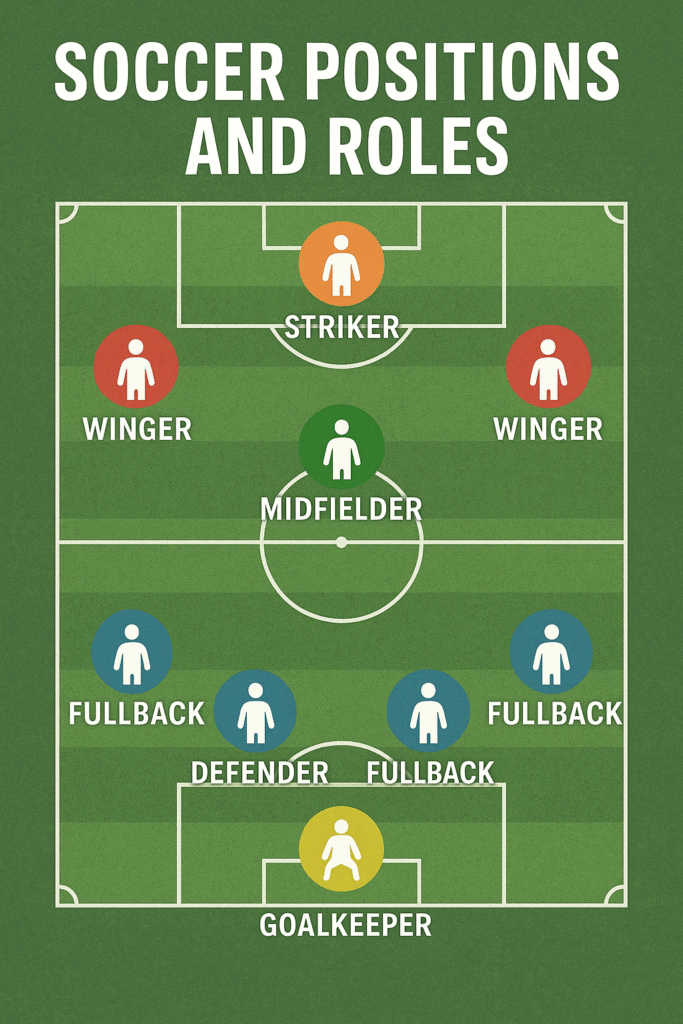
This article explains what is a striker in soccer, what is a winger in soccer, what is a midfielder in soccer, what is a defender in soccer, what is a fullback in soccer, and what is a goalkeeper in soccer.
But it also tells how those positions came to exist—and how they continue to shape the rhythm of the game.
The Evolution of Soccer Formations
Early soccer looked nothing like the modern match.
In the late 1800s, formations were wild, with teams playing 2-3-5 — two defenders, three midfielders, five forwards. It was chaos and spectacle, full of dribbling duels and goals.
As tactics matured, formations shifted to WM (3-2-2-3) in the 1920s, when Arsenal manager Herbert Chapman decided teams needed more structure. Defenders began to mark zonally. Midfielders learned to protect space.
By the 1960s, the 4-4-2 had become standard in England and beyond. Two strikers, two banks of four, and a game built on physical balance. Later decades introduced 4-3-3, 4-2-3-1, and 3-5-2 systems.
Each formation adjusted the meaning of every position, blending tradition with innovation. Today, players switch roles mid-game. Fullbacks drift into midfield. Strikers drop deep. Goalkeepers act as playmakers.
The lines are fluid now—but the roots of each role still matter.
What is a Striker in Soccer
A striker exists to finish.
Their main job is to turn passes into goals. They read defenders like chess pieces and strike when others hesitate.
Classic strikers like Gerd Müller, Alan Shearer, and Robert Lewandowski built their reputations on precision and timing.
Modern strikers often do more than score. They press high, link play, and create space for teammates.
Coaches train them on first-time finishing, off-the-shoulder runs, and movement inside crowded boxes.
The number nine remains the sport’s most iconic shirt.
It carries the promise of goals and the burden of expectation.
What is a Winger in Soccer
A winger stretches the pitch and brings chaos to order.
They thrive on speed, skill, and isolation. Their task is to take on defenders, deliver crosses, or cut inside to shoot.
Old-school wingers stayed glued to the line, swinging crosses for center forwards.
In the 2000s, the role evolved—players like Cristiano Ronaldo and Arjen Robben turned inside, using weaker feet for lethal shots.
The modern winger is part artist, part athlete.
They run, press, and defend. They beat players not only with pace but with sharp decision-making.
Training focuses on dribbling, agility, and precise delivery under pressure.
When a winger runs at full stride, fans rise to their feet. It’s the sport’s most direct form of excitement.
What is a Midfielder in Soccer
The midfielder is the team’s heartbeat.
They touch the ball more than anyone else and decide how fast the game moves.
Early soccer had simple roles: attackers and defenders. But as tactics matured, the midfield emerged as its own battlefield.
There are different types.
A defensive midfielder breaks up attacks and protects the defense.
A box-to-box player covers huge ground, connecting defense to attack.
An attacking midfielder finds space and supplies assists.
Famous examples range from Claude Makélélé’s calm control to Luka Modrić’s vision.
Training focuses on awareness, short passing, and positioning under pressure.
Without midfield control, no team can breathe.
What is a Defender in Soccer
Defenders protect more than space—they protect order.
They read runs, intercept passes, and block shots.
In early soccer, defenders stood deep and cleared long. Modern defenders must think faster. They build from the back, set the line, and break pressure with composure.
Center backs now act as quarterbacks, launching attacks with pinpoint passes.
The best combine strength with calm. Think of players like Paolo Maldini, Virgil van Dijk, or Sergio Ramos—leaders who defend with anticipation, not just muscle.
Drills center on positioning, timing, and communication.
A defender’s mistake is visible to everyone, which is why confidence and discipline define the greats.
What is a Fullback in Soccer
Fullbacks are the sport’s quiet revolutionaries.
They used to stay home, marking wingers and stopping crosses.
Now, they shape entire systems.
Modern fullbacks attack, overlap, and create width.
Players like Cafu, Dani Alves, and Andrew Robertson turned the role into an art form.
They sprint the length of the pitch dozens of times a match, connecting defense and attack.
Fullbacks train stamina, crossing, and recovery speed.
They balance aggression with timing—one step late, and a counterattack begins.
Their position defines modern width and pace.
What is a Goalkeeper in Soccer
The goalkeeper is both last line and first spark.
They guard the net, command the box, and start plays from the back.
Early goalkeepers simply caught and cleared. Today’s are sweepers who pass under pressure.
Manuel Neuer redefined the position with his footwork and boldness outside the box.
Keepers now read angles, communicate constantly, and launch attacks with long throws or laser passes.
Training focuses on reflex, agility, and decision-making.
The best goalkeepers radiate calm, making impossible saves look routine.
They wear the number one not by chance but by necessity.
How the Pieces Fit Together
A formation is a conversation between roles.
A striker’s run pulls defenders. A midfielder fills the gap. A fullback overlaps.
Every position shapes the others.
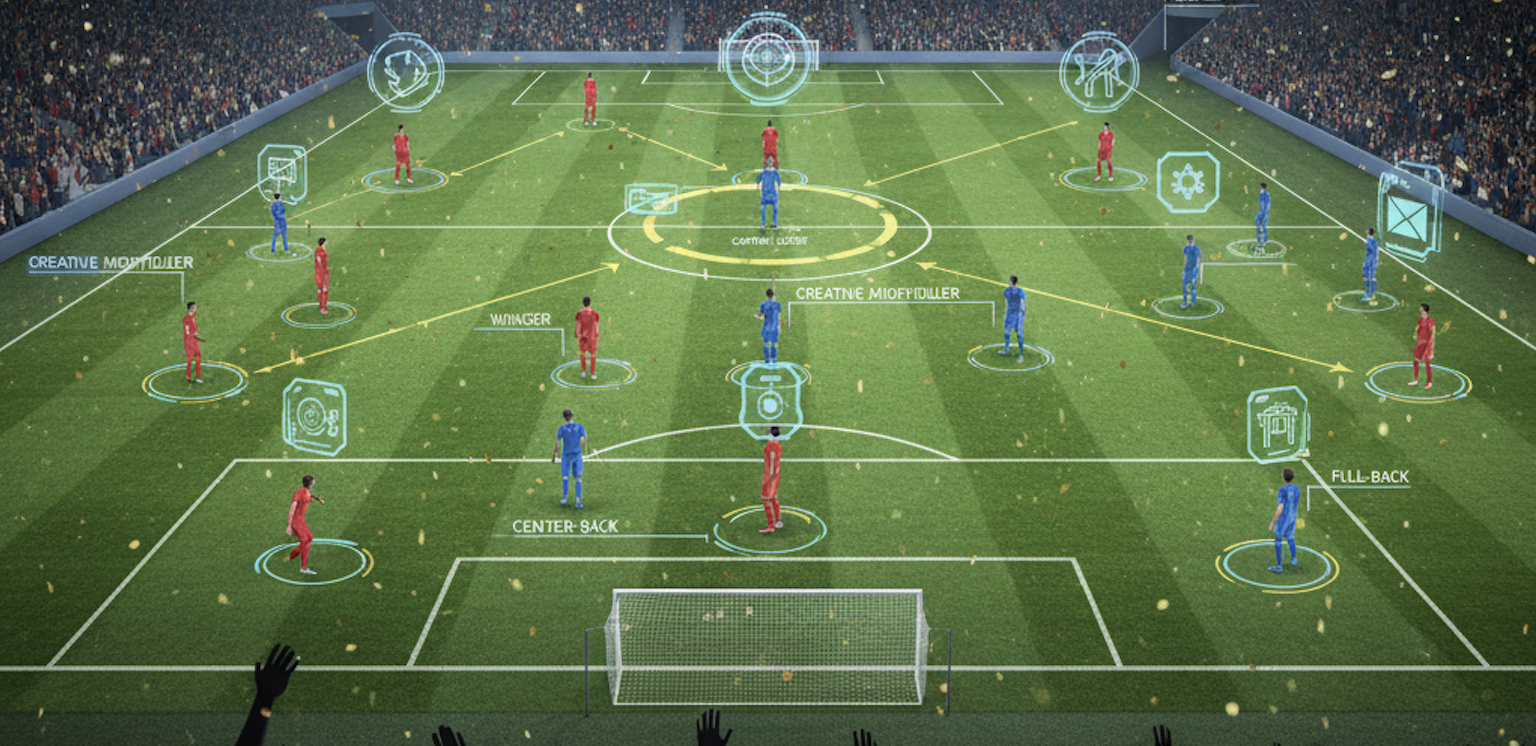
In a 4-3-3, the wingers stay high, the fullbacks push forward, and one holding midfielder protects the back line.
In a 3-5-2, wing-backs cover the entire flank while strikers combine in tight spaces.
In a 4-2-3-1, the attacking midfielder becomes the creative core.
Modern soccer is about fluidity, but the fundamentals remain.
Each player must master their space, read the field, and understand how their role serves the team.
The Legacy of Numbers
Numbers still tell stories.
The number ten belongs to creators, from Pelé to Zidane to Messi.
The number seven is often worn by fast wingers or explosive forwards.
The number six signals control and balance in midfield.
These numbers have become symbols of identity and heritage.
Behind each shirt lies a role that shaped decades of tactics.
From rigid 2-3-5 chaos to positional play and pressing traps, soccer’s numbers remind fans where the game came from—and where it’s going.
Final Whistle
Soccer isn’t only a game of goals. It’s a game of space, rhythm, and connection.
Understanding positions turns watching into learning.
When you know what a winger does or what a defender risks with each tackle, every match becomes richer.
Formations will keep changing. Roles will keep blending.
But the core idea never fades: eleven players, one structure, endless movement.
Soccer’s magic lives in how those positions come alive together.
Every pass, every save, every run—it’s all part of one living design.