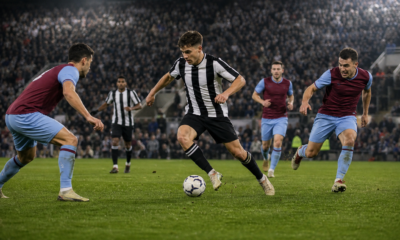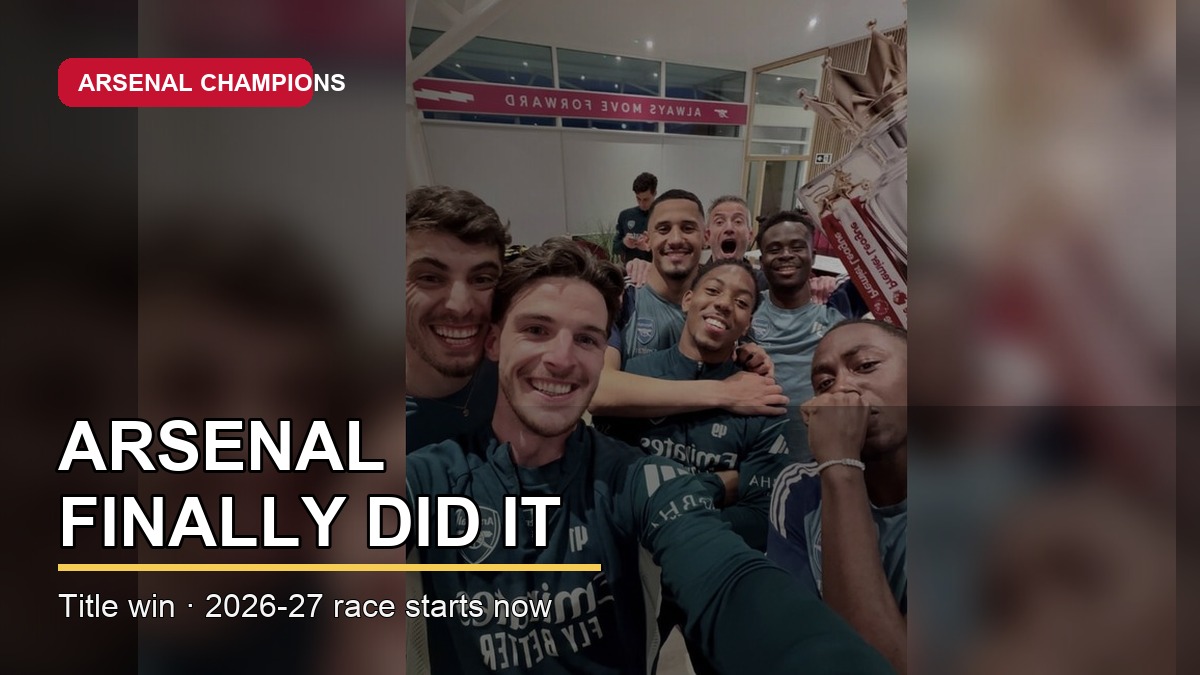
Arsenal’s Premier League title win is not just a celebration story. It is the start of a new problem for Mikel Arteta’s side: how do champions behave once the chase is over and the rest of the league starts building specifically to catch them? ESPN reported that Manchester City’s 1-1 draw at Bournemouth sealed Arsenal’s 14th league championship and their first Premier League title in 22 years. That detail matters because it explains the size of the emotional release around the club. Arsenal have not merely ended a drought; they have changed the expectations attached to every league match they play from here.
The win also gives the 2026-27 Premier League race a sharper shape months before the first ball is kicked. Arsenal will enter the new campaign as the reference point. Manchester City will enter it with motivation, questions and the sting of a race that slipped away. Liverpool, Chelsea, Manchester United, Newcastle, Tottenham and Aston Villa will all see opportunity in a league where the champion has changed and the dominant City era has finally been interrupted. That makes Arsenal’s title both an ending and a beginning.
Why Arsenal’s title win lands differently
The reason this Arsenal title feels bigger than one season is the length of the build-up. ESPN’s deeper follow-up on Arsenal’s five-phase plan framed the win as the product of a long club project rather than a single hot streak. Arteta’s Arsenal have been discussed for years as a team on the edge of something: young enough to improve, organised enough to compete, but still chasing the final step that separates contenders from champions. Now that step has been taken.
That changes the story around Arteta. He no longer has to sell only progress, potential and process. He can point to proof. The same tactical habits that were once debated — control, rest defence, set-piece detail, physical duels, wide rotations, patience in possession and emotional discipline — now sit inside a title-winning season. For supporters, that creates validation. For rivals, it creates a target.
There is also a psychological shift. Arsenal are no longer chasing City from below. They are defending a crown while trying to prove the title was not a one-off. That is a harder emotional position than it sounds. A team that wins for the first time in a generation has to move quickly from release to repetition. Celebrations are deserved, but the summer will test whether Arsenal can turn the energy of the breakthrough into the cold routine of another title push.
Arteta’s blueprint now has a different burden
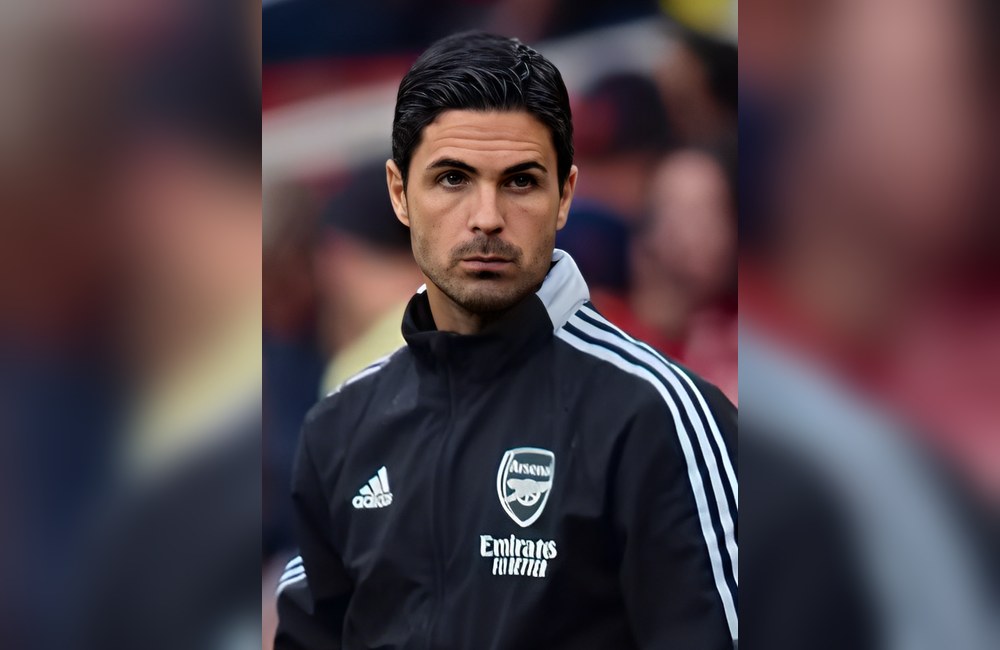
Before the title, Arteta’s blueprint could be judged partly on trajectory. Were Arsenal closer? Were the young players improving? Was the squad deeper? Were they harder to beat? Those questions still matter, but the standard has changed. Champions are judged by sustainability.
That puts pressure on the details that made Arsenal strong. Their best version has been built on collective structure rather than one-player dependence. Bukayo Saka gives them elite threat and reliability from the right. Martin Odegaard gives them rhythm and final-third imagination. Declan Rice gives them power, range and defensive coverage. William Saliba gives them calm and recovery pace at the back. But a title defence demands more than a first XI. It demands rotation without collapse, tactical flexibility without confusion and enough freshness to survive domestic and European weeks.
The next phase for Arsenal is therefore not about proving they can win. It is about proving they can absorb the cost of winning. Every opponent will have clearer reference points. Low blocks will be designed around reducing Arsenal’s cutbacks and set-piece threat. Pressing teams will target build-up patterns they now know well. Rival coaches will spend the summer asking where Arteta’s side can be forced away from their comfort zone.
That does not mean Arsenal are about to regress. It means the title has upgraded the difficulty level. The champions get more respect, but they also get more specialised game plans.
The Saka factor and the core that must stay hungry
Any early 2026-27 forecast starts with Arsenal’s core. Saka remains the face of the attack because he combines output, ball security, defensive work and emotional connection with the fanbase. The squad around him is now experienced in a different way. Title races teach lessons that ordinary strong seasons do not: how to win when performance drops, how to handle scoreboard pressure, how to manage late-game stress and how to ignore the weekly noise.
That experience should make Arsenal more dangerous next season. The question is whether it also makes them comfortable. The best repeat champions keep the edge. They treat last season’s success as evidence, not as protection. Arsenal’s leaders will have to make that distinction early. If standards slip in preseason or the opening weeks, opponents will sense it quickly.
There is also a selection issue. Once a team wins the league, more players believe they deserve important minutes, more agents know the market value has risen and more clubs start looking at the squad. Arsenal’s football leadership has to manage reward and renewal at the same time. Contract stability, role clarity and smart recruitment will be just as important as any tactical tweak.
Manchester City’s response will define the race
The title was sealed by a Manchester City draw at Bournemouth, according to ESPN, and City’s own post-match reaction underlined how close and emotionally charged the chase remained. City’s official site carried Pep Guardiola’s message that his team fought until the very end, while Premier League news surfaces also pointed to City players using the disappointment as motivation for next year.
That is why Arsenal cannot expect City to fade simply because the crown changed hands. City’s response is one of the central variables of the 2026-27 season. If Guardiola’s future and City’s wider transition become official summer storylines, the uncertainty will matter; if City stabilise quickly, the title race may harden again around the two clubs. Either way, Arsenal’s margin for complacency is tiny.
City still have elite talent, institutional memory and the ability to attack the transfer market from a position of strength. What has changed is the aura. Arsenal have proved the race can be won by someone else. That does not destroy City’s threat, but it changes how the league thinks. Challengers now have a recent example that the ceiling can be broken.
The Champions League question
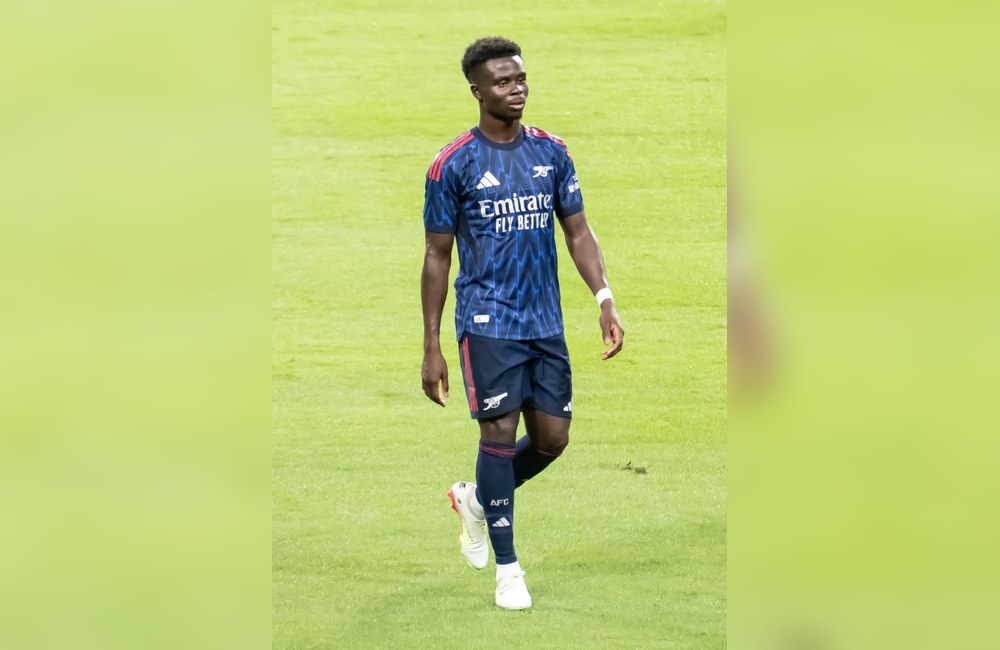
Arsenal’s domestic title also feeds into Europe. The club’s own site is already pushing Champions League coverage around the 2025-26 campaign, and the new status changes how Arsenal will be viewed on continental nights. English champions do not get to call themselves outsiders for long. A team that has conquered the Premier League will be expected to carry that authority into the Champions League.
That creates a balancing act. Arsenal’s best route to another league title may involve sharper rotation around Europe, but the club’s ambition will not stop at domestic success. The Champions League can deepen belief, but it can also drain legs and emotion. Arteta’s staff must decide when to protect key players, when to chase momentum and when to trust the squad players who helped make the title possible.
For fans, this is the exciting tension. Arsenal’s title win raises every ceiling at once. Supporters will want another league challenge, a serious European run and visible summer ambition. Those demands are fair, but they require depth. The Champions League is not a side quest for a club at Arsenal’s level; it is part of the identity they are trying to confirm.
Early 2026-27 Premier League forecast
The earliest forecast should be humble because the summer can change everything. Transfers, injuries, fixture sequencing, managerial decisions and European workloads will all reshape the race before August. Still, Arsenal deserve to begin in the top tier of contenders.
Tier one is Arsenal and Manchester City. Arsenal have the trophy, the tactical base and a young core with room to keep improving. City have the scar tissue of losing the race, plus enough quality to respond. If Guardiola’s situation becomes a transition point, City’s range of outcomes widens; if continuity holds, they remain the obvious co-favourite.
Tier two includes the clubs with enough talent to turn turbulence into a title push if the summer breaks correctly. Liverpool’s ceiling depends on recruitment and defensive balance. Chelsea’s depends on turning squad depth into week-to-week control. Manchester United’s depends on whether structure finally catches up with scale. Newcastle, Tottenham and Aston Villa can all influence the top-four race and take points from title contenders even if a full title charge is a bigger ask.
The strongest early prediction is not a precise table. It is that Arsenal will be chased differently. More teams will treat a draw against them as a good result. More matches will become tests of patience. More headlines will ask whether the champions are wobbling. That is the normal cost of status.
What Arsenal must do this summer
Arsenal’s summer should be judged by three questions. First, have they added enough variety in attack? Title-winning teams still need new ways to solve old problems, especially when opponents spend months studying them. A different type of forward, another one-v-one winger or a midfielder who changes tempo could all matter depending on market opportunity.
Second, have they protected the physical base of the squad? The Premier League is unforgiving, and a repeat bid will require controlled minutes for players who carried heavy workloads. Arsenal cannot rely on the same core to solve every week if they also want to compete in Europe.
Third, have they kept the emotional edge? Recruitment can refresh a dressing room, but so can internal competition. The best champions create the feeling that nobody is safe, not in a destructive way, but in a standards-driven way. Arteta’s challenge is to celebrate loyalty while still demanding growth.
What fans should watch next
The first sign will be messaging. If Arteta and senior players talk about the title as a foundation rather than a finish line, that will be the right tone. The second sign will be recruitment speed. Arsenal do not need to win the transfer window on social media, but they do need clarity around priority positions. The third sign will be how the squad looks in the early form guide signals of competitive fixtures: compactness without the ball, sharpness in transitions and whether the attacking patterns still feel fresh.
Supporters should also watch City’s language. A wounded City side can be dangerous, especially if the squad frames Arsenal’s title as motivation. Guardiola’s reaction after the Bournemouth draw already suggested pride rather than surrender. That is exactly why Arsenal’s achievement should be celebrated without assuming the next race will be easier.
Bottom line
Arsenal finally did it, and that changes everything. The Premier League title validates Arteta’s long-term project, rewards a fanbase that waited through years of near-misses and resets the competitive map for 2026-27. But the reward for becoming champions is a harder version of the league. Opponents will prepare differently. City will respond. Europe will demand more. The summer will test squad planning as much as emotion.
For now, Arsenal deserve to start as a leading contender to repeat. They have the manager, the core, the structure and the proof. The next question is whether they can turn a historic breakthrough into the habit that defines great teams: winning again when everyone is coming for them.
Sources
- ESPN: Arsenal win first Premier League title in 22 years after Man City draw — https://www.espn.com/soccer/story/_/id/48813813/arsenal-win-premier-league-title-2026-manchester-city-bournemouth
- ESPN: Inside Arsenal’s five-phase plan to win Premier League title — https://www.espn.com/soccer/story/_/id/48823578/inside-arsenal-five-phase-plan-win-premier-league-title-mikel-arteta-edu
- BBC Sport Arsenal page — https://www.bbc.com/sport/football/teams/arsenal
- Premier League news page — https://www.premierleague.com/en/news?query=Arsenal%20title
- Manchester City: We fought all the way until the very end, says proud Pep — https://www.mancity.com/news/mens/pep-guardiola-bournemouth-v-city-reaction-63914824